In the fiercely competitive lingerie market, precision in design, comfort, and personalization have become key factors for brand success. Traditional lingerie design relies on subjective experience and iterative sample adjustments; this approach is not only time-consuming and costly but also struggles to achieve a precise fit for complex bust shapes.
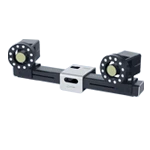
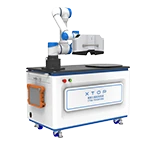
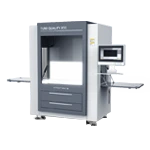
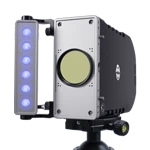
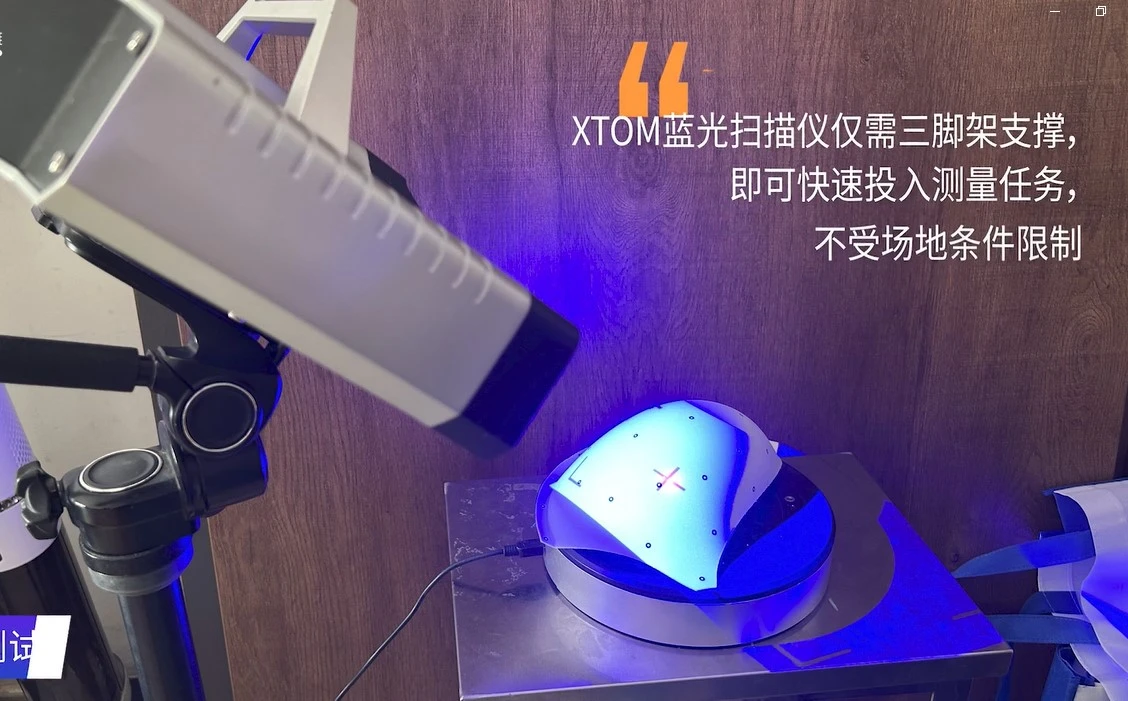
To address this challenge, a renowned lingerie brand adopted the XTOP3D XTOM-MATRIX industrial-grade blue-light 3D scanner. By leveraging digital technology to revolutionize the design and manufacturing processes for bra pads, the brand has enhanced its product development efficiency and market competitiveness. The XTOM-MATRIX scanner accurately captures the intricate details and overall contours of bra pads and analyzes cup surface curvature radii, thereby supporting flexible production and on-demand manufacturing.
Analysis of Pain Points
1. Complexity of Curved Surfaces
Bra pads feature irregular 3D curved surfaces; traditional calipers or projectors can only measure localized points and fail to capture the overall curvature.
Strict control over the radius of curvature for the cup surface is required, with dimensional accuracy maintained within ±2 mm (as this directly impacts support performance).
2. Interference from Material Deformation
Soft materials—such as foam or silicone—deform under pressure (contact-based measurement results in errors ranging from 15% to 30%).
3. Difficulty in Implementing Process Optimization
Traditional manufacturing relies on empirical judgment, making it difficult to scientifically quantify parameters such as thickness distribution and support structures. This leads to challenges in balancing comfort and support, as well as difficulties in consistently controlling fit across different cup sizes.
Necessity of 3D Inspection for Bra Pads
Inspection parameters using high-precision blue-light 3D scanning technology: arc-length fit and ergonomic contour alignment to prevent shifting or pressure marks during wear.
Graduated thickness analysis: ±0.5mm tolerance in specified zones; analysis of dimensional deviations and thickness distribution to avoid inadequate support or discomfort caused by pressure points.
Surface protrusion height: peak-to-valley difference ≤4mm; analysis to prevent visible surface irregularities or unsightly outlines showing through clothing.
Blue-Light 3D Scanning Solution
As a high-precision industrial 3D inspection device, the XTOM-MATRIX industrial-grade blue-light 3D scanner captures 3D digital models of chest pads. It provides comprehensive 2D and 3D analysis of surface geometry and dimensions, fully visualizing deviations from CAD data—such as warpage, deformation, localized depressions, and sink marks—making it ideal for quality management and first-article inspection.
1. Precision 3D Data Acquisition
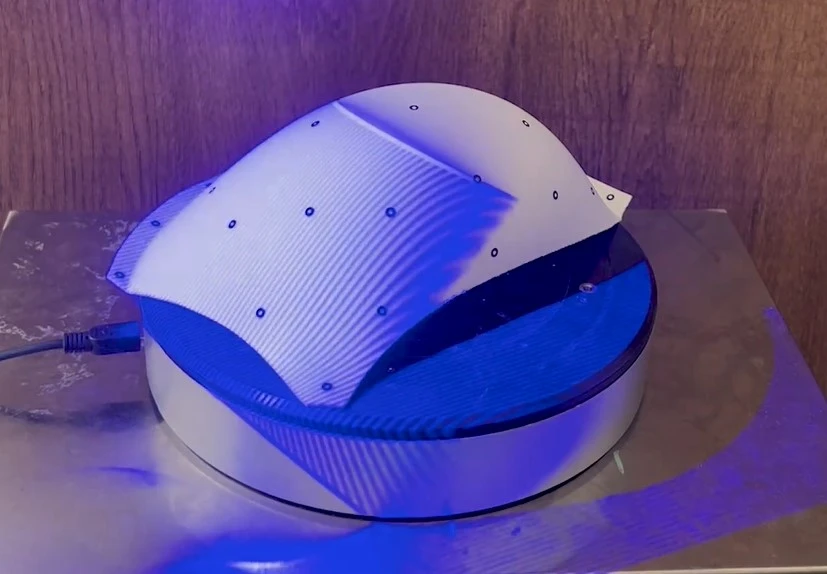
Rapid scanning of bra pad samples—featuring diverse body and bust shapes—generates STL 3D mesh models. This process captures critical data, such as precise 3D contours, eliminating the human error associated with traditional measurement methods.
2. Digital Reconstruction of Bra Pad Design
Non-contact blue-light 3D scanning prevents the deformation caused by pressure on soft materials, ensuring accurate point-cloud data acquisition. Designers can perform virtual design and adjustments directly within 3D software, simulating the support performance of various pads to achieve a "what-you-see-is-what-you-get" design experience.
3. Scientific Quantification of Manufacturing Parameters
3D data models enable the simulation and analysis of stress distribution across different points of the bra pad. This guides the scientific setting of manufacturing parameters—such as stitching density, foam hardness, and strap width—ensuring a balance between comfort and support.
4. Personalized Customization and Flexible Production
By integrating user data, brands can rapidly generate customized bra pad designs. Flexible production lines then enable efficient, small-batch, multi-variety manufacturing to meet the needs of niche market segments.
Typical Application Scenario
Utilizing the XTOP3D XTOM industrial-grade blue-light 3D scanner allows for the precise capture of geometric surface details, enabling the analysis of whether the bra pad's 3D shape meets design specifications.
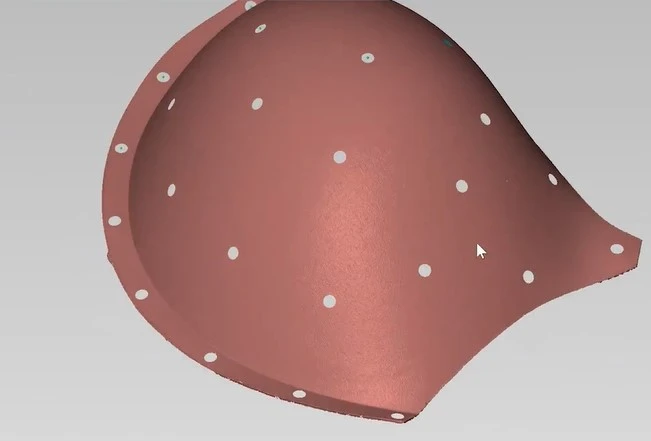
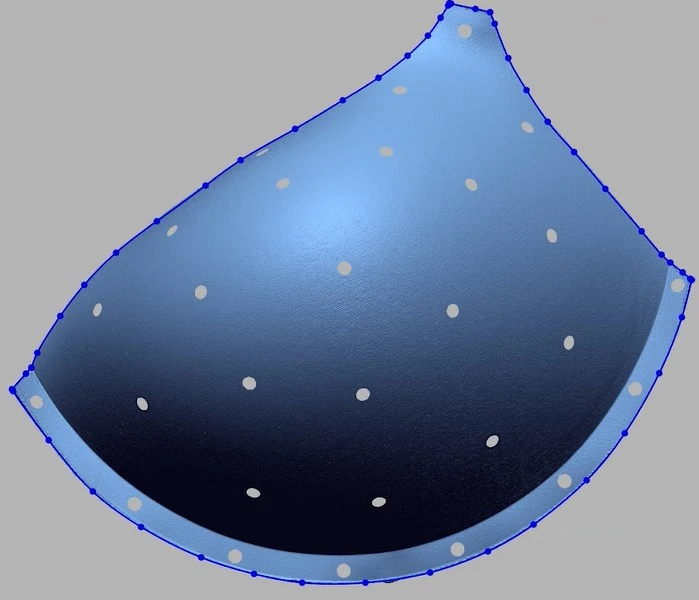
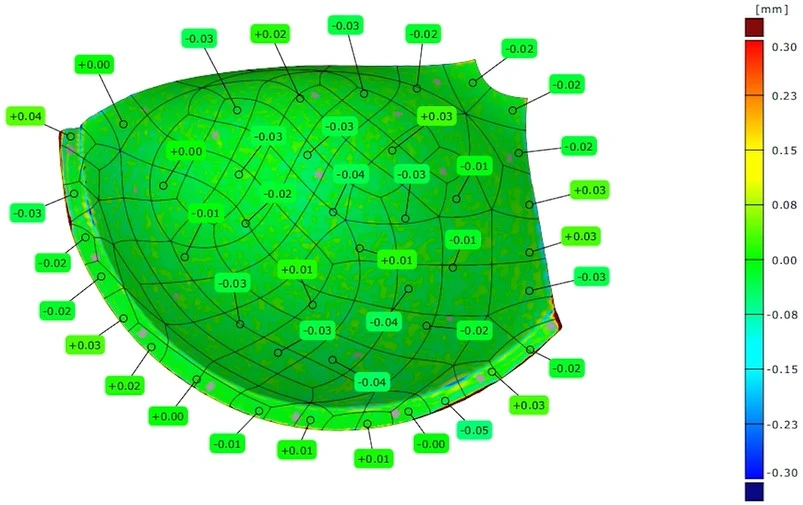
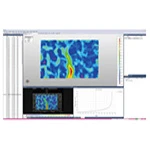
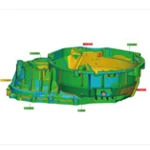
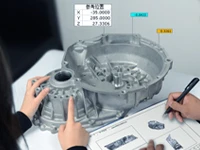
By using 3D scanning to efficiently capture accurate and complete 3D data of bra pads and importing this data into 3D inspection software, intuitive inspection reports are generated. Analysis results are visualized via color maps, clearly displaying dimensional deviations in the bra pad samples.
The introduction of the XTOM industrial-grade blue-light 3D scanner has not only revolutionized the design and manufacturing processes for bra pads but also propelled the brand's transition from "standardized production" to "personalized manufacturing." Leveraging high-precision 3D data to drive design and scientifically quantify process parameters helps reduce costs and increase efficiency in product development, while simultaneously enhancing user experience and market competitiveness.
Applying 3D dimensional inspection to bra pad manufacturing significantly improves the fit between the pad's curvature and the human body's contours; it serves not only as a means to control manufacturing precision but also as a key enabler of precise, intelligent production. Although the initial investment in blue-light 3D scanning equipment is significant, the long-term benefits—including improved product quality, enhanced user experience, and reduced costs—are substantial.