Have you bought a helmet recently?
The Traffic Management Bureau of the Ministry of Public Security recently issued a notice announcing that, starting June 1, 2020, a nationwide "One Helmet, One Belt" safety campaign will be launched.
Wearing a helmet is mandatory when riding an electric bicycle!

Notice Regarding Regulations on Electric Bicycle Management
To further standardize the management of electric bicycles, effectively raise traffic safety awareness among riders and passengers, and safeguard the lives and property of the public, the traffic management departments of the public security authorities will implement city-wide enforcement regarding the wearing of safety helmets by electric bicycle riders and passengers, effective May 10, 2020. Relevant details are hereby announced as follows:
I. Riders and passengers are strongly encouraged to wear safety helmets (note: electric bicycles are permitted to carry only one passenger under the age of twelve). Traffic management departments will provide traffic safety education to riders and passengers found not wearing safety helmets.
II. For enterprises and industries reliant on electric bicycles for delivery services—such as express delivery and food delivery—riders must set an example by wearing safety helmets.
III. Insurance companies and businesses involved in the manufacture and sale of electric bicycles are encouraged to adopt consumer-friendly measures, such as providing complimentary insurance or safety helmets.
IV. Party and government agencies, as well as enterprises and public institutions, should take the lead by educating and organizing their personnel to conscientiously wear safety helmets when riding electric bicycles, thereby fostering a positive social trend. The general public is requested to cooperate actively and comply with these management regulations.

Unprecedented Demand: A Boom in Helmet Mold Manufacturing
Industry experts note that a daily output of 2,000 units qualifies a helmet manufacturer as a "large-scale" enterprise; typically, such companies do not maintain massive equipment investments or significant excess production capacity. Estimates based on the new "One Helmet, One Belt" policy suggest a supply gap of over 200 million helmets.
Helmets are essential for any speed-related sport; in terms of protecting specific body parts, the helmet is the primary piece of life-saving gear. With the skyrocketing demand for helmets, the industry's social media feeds have been flooded with posts about helmet molds—making them the latest "viral" sensation, following melt-blown die heads and "miracle wands" earlier this year.
The surge in helmet popularity has naturally created a need for more molds to produce them. Industry professionals are actively seeking helmet design data, quality control standards for molds, and manufacturing equipment. A wave of helmet mold manufacturing is currently underway.
The Helmet Manufacturing Process
Much like vehicle manufacturing, helmet production involves multiple components—such as the shell, visor, liner, and peak. The quality and comfort of the finished helmet depend directly on the manufacturing technology and processes employed.
The production process generally comprises six stages: shell fabrication, core fabrication, comfort liner fabrication, production of other accessories, assembly, and random quality inspections.
Helmets are complex structures featuring intricate layers, numerous curved surfaces, and grooves; consequently, designing the models and manufacturing the molds is a labor-intensive and time-consuming task. To ensure safety and comfort while boosting production efficiency and gaining a competitive edge in the market, many manufacturers are now seeking 3D mold models and utilizing surface measurement technologies.
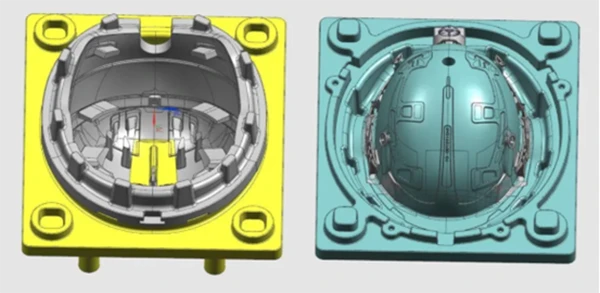
3D Digital Solutions
Helmets feature complex shapes and a wide range of component specifications, making product finalization a complex process. Traditional forward design—which begins with 3D modeling and involves multiple rounds of design, testing, and refinement—is extremely time-consuming and labor-intensive.
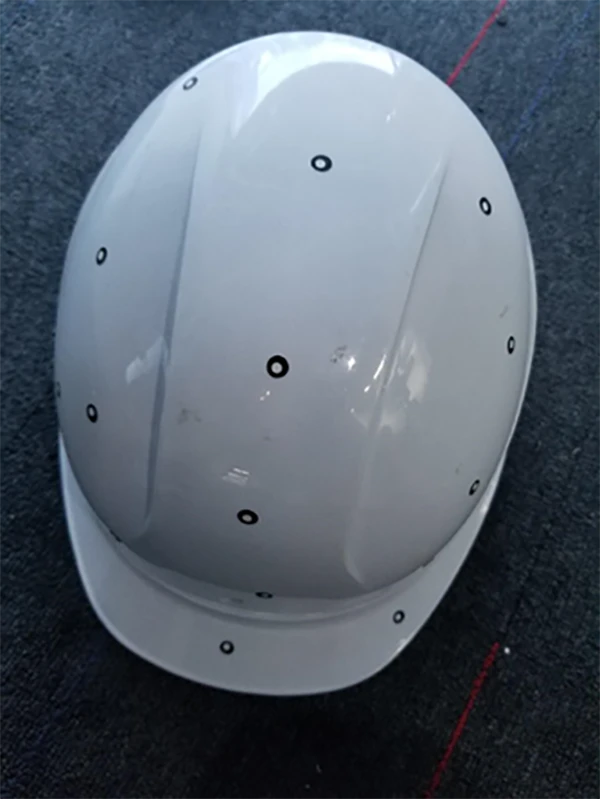
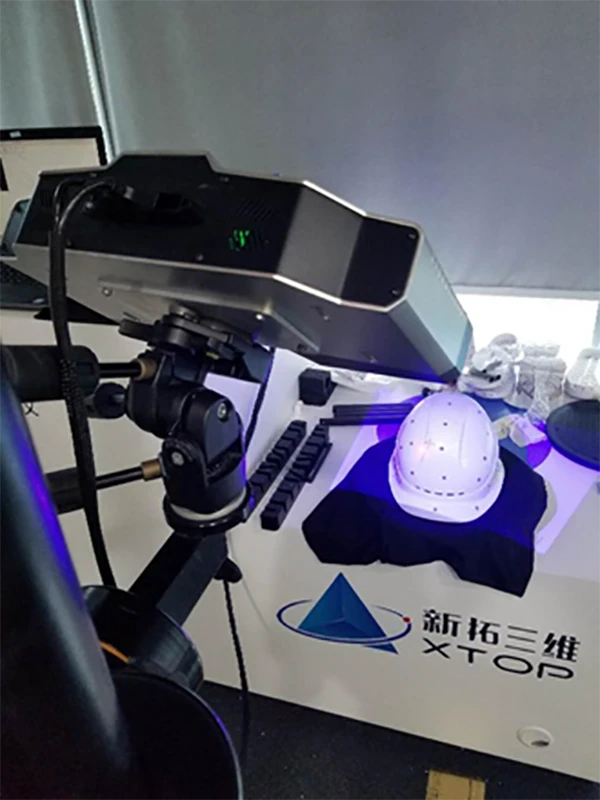
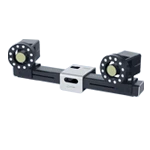
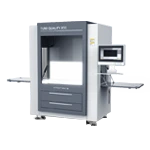
To better ensure the dimensional accuracy and comfort of helmet products, the XTOP3D XTOM 3D optical measurement system is used to acquire 3D dimensional data and simulate surface geometry; this data supports product testing, assembly trials, rapid prototyping, and manufacturing.
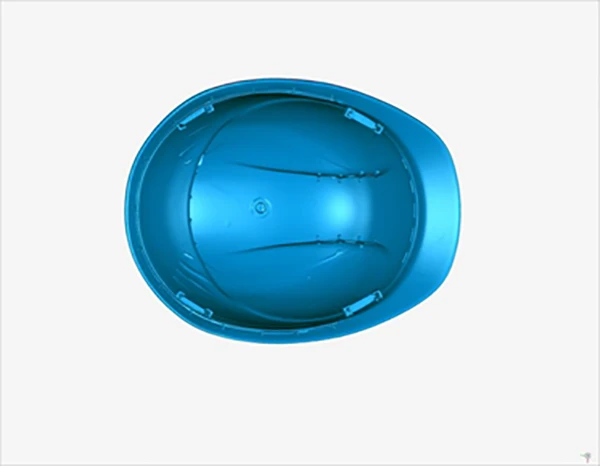
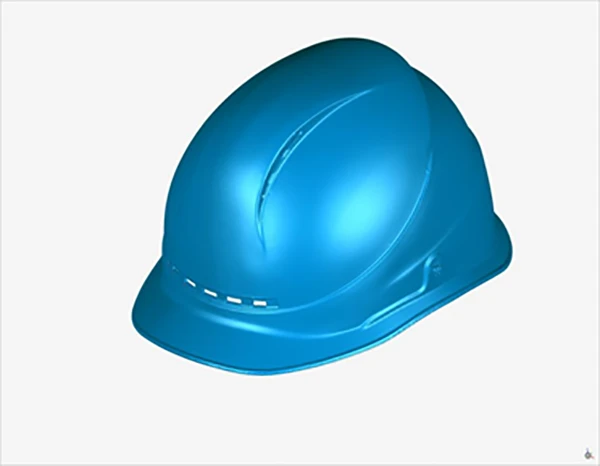
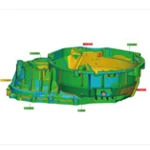
XTOP3D’s 3D digitization solution for helmet manufacturing enables the efficient acquisition of 3D helmet data, facilitating direct design modifications to molded helmets and overcoming challenges associated with rapid design and 3D model generation. Unconstrained by shape or structure, the solution allows for the rapid creation of complex forms without the need for molds; this enhances detail precision and results in products with superior fit and comfort, helping manufacturers capture significant market opportunities.