I. Adaptation of DIC technology for heavy-duty rotor wind tunnel measurement
Compared to conventional aircraft structures, the rotors of heavy-duty helicopters and large heavy-load UAVs are characterized by large size range, high blade flexibility, large rotational inertia, and complex aerodynamic coupling, making them the most difficult core components to measure in wind tunnel tests. Under the coupled conditions of high-speed rotation and wind tunnel airflow loads, heavy-duty rotors are prone to nonlinear oscillation, elastic torsion, and high-frequency flutter, and their dynamic response characteristics directly determine the overall aerodynamic efficiency, load distribution, and structural safety performance of the aircraft.
Traditional single-point measurement cannot cover the full range of blade deformation and transient motion, has insufficient dynamic response speed, and cannot match the test conditions of heavy rotors with high speed and strong fluctuations. It has long suffered from problems such as large measurement blind zone, large interference, and discontinuous data.
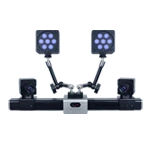
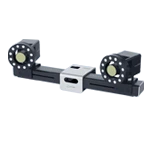
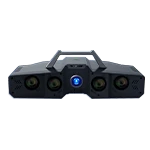
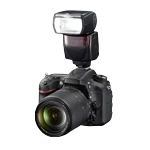
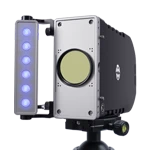
The XTIC-SPARK 3D high-speed measurement system, based on DIC digital image correlation measurement technology and equipped with a high-speed camera, is perfectly suited for heavy-duty rotor testing scenarios. It requires no additional equipment or model modification, does not interfere with the original motion state of the flow field and structure, and is compatible with all types of wind tunnel conditions, including open and closed tunnels, as well as low-speed and high-speed wind tunnels, continuously capturing complete and continuous dynamic response data of heavy-duty rotors.
II. Measurement and Analysis of Dynamic Parameters of Heavy-Duty Rotors
In heavy-duty rotor wind tunnel testing systems, flapping angle, yaw angle, and torsion angle are core indicators for determining the dynamic stability, aerodynamic performance, and structural reliability of rotors. Addressing the characteristics of heavy-duty rotor blades—large loads, significant deformation gradients, and prominent motion hysteresis—high-speed 3D-DIC measurement technology, relying on high-speed inter-frame matching and global speckle/marker tracking technology, can simultaneously, quantitatively, and precisely complete the dynamic calculation and data analysis of these three key parameters.
Flapping Angle Measurement : The flapping angle characterizes the vertical oscillation of the blades. Heavy rotors have high inertia and loads, and airflow fluctuations can easily trigger large flapping vibrations. DIC dynamically tracks the vertical displacement changes of the blades throughout the entire process, continuously outputting the flapping angle amplitude, vibration frequency, and fluctuation patterns. It can accurately identify flapping instability characteristics under different wind speeds and rotational speeds, providing data support for rotor damping optimization, resonance suppression, and lightweight structural design.
Shimming Angle Measurement : The shimming angle affects the dynamic stability of heavy-duty rotors operating at high speeds. Heavy-duty rotors have strong rotational inertia, and shimming deviation can easily cause uneven blade stress, abnormal load on the transmission structure, and high-speed instability. The DIC measurement system accurately calculates the real-time shimming deviation and its trend through dynamic comparison of all points, effectively quantifying the dynamic damping characteristics of the rotor and identifying potential shimming hazards under high-speed operating conditions.
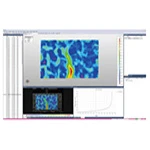
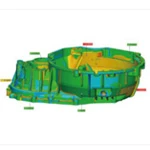
Torsion Angle Measurement : Tiny elastic torsion of the blade directly alters the aerodynamic angle of attack and lift distribution, leading to aerodynamic efficiency degradation and load imbalance. Under heavy load conditions, heavy-duty blades are prone to torsional hysteresis and gradient deformation, subtle differences that traditional measurements struggle to capture. DIC (Digital Induction Coding) can generate a full-section torsional distribution cloud map of the blade, visually presenting the overall torsional pattern and providing precise data for heavy-duty rotor blade profile optimization, stiffness matching, and aerodynamic performance upgrades.
III. Engineering Application Value
Addressing the challenges of measuring the large size, high flexibility, and high dynamics of heavy rotors, high-speed 3D-DIC measurement technology can achieve interference-free, blind-zone-free, and high-precision full-domain dynamic testing.
High-speed 3D-DIC technology can simultaneously acquire rotor attitude motion and structural deformation data, fully reproducing complex aerodynamic coupling motion characteristics, and providing reliable digital testing support for aerodynamic layout optimization, structural strength verification, and flight stability verification of heavy helicopters and large UAVs.
IV. Frequently Asked Questions (FAQ)
Q1: Is the DIC measurement system compatible with the overall synchronous measurement of large-size heavy rotors?
A1: Fully compatible. DIC supports large field-of-view, full-domain integrated measurement, which can cover the entire heavy rotor structure at once and simultaneously collect dynamic parameters of multiple blades without the need for segmented measurement and secondary stitching, ensuring the synchronization and consistency of the overall motion data.
Q2: Will wind tunnel airflow disturbances and environmental reflections affect the DIC measurement accuracy of heavy rotors?
A2: No. High-speed 3D-DIC measurement technology can optimize algorithms and light source management, effectively resisting airflow disturbances in open wind tunnels and reflection interference from closed wind tunnel cavities. It can maintain sub-angle and micron-level high-precision measurements under all operating conditions, including low speed and transonic speeds.
Q3: What are the core advantages of DIC heavy-duty rotors?
A3: The core advantages of DIC technology are that it has no measurement blind spots, is suitable for high dynamic working conditions, and can capture transient vibration, torsion, and oscillation details across the entire range.
Q4: Can DIC technology simultaneously measure rotor angle parameters and blade deformation data?
A4: It can simultaneously calculate the three major motion angles of flapping, oscillation, and torsion, and output the displacement, strain, and vibration deformation data of the blade across the entire range, realizing the testing of attitude parameters and structural mechanical parameters, and meeting the needs of refined wind tunnel testing.
Q5: Is the DIC measurement process complicated, and can it be adapted to wind tunnel batch testing?
A5: The process is simple and efficient. After calibration, continuous batch testing can be carried out. No manual intervention is required during the test process, which greatly reduces the test time and test cost of heavy rotor wind tunnel tests and is suitable for routine batch test scenarios.