In modern railway systems, rails are subjected to the impact of cyclic dynamic loads from trains. This is particularly critical when high-speed trains negotiate curves, where immense centrifugal forces can cause lateral rail displacement, tilting, and deformation of fastening components (such as sleepers and rail fasteners). If the failure of these components leads to uncontrolled displacement, the consequences range from accelerated track geometry distortion and increased running resistance to severe outcomes such as track instability and derailment accidents.
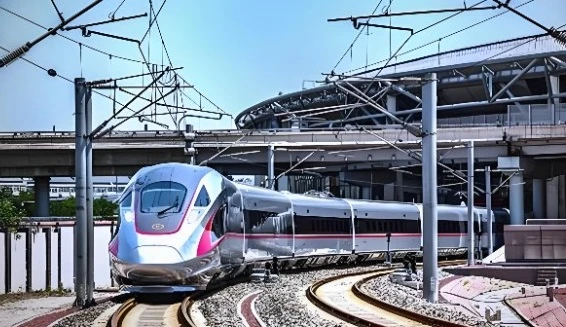
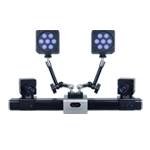
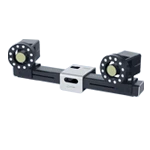
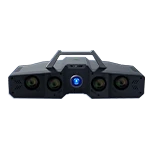
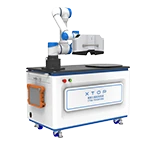
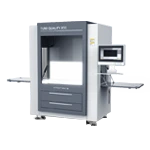
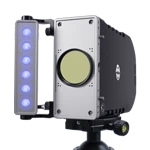
To enhance operational safety redundancy for trains, the dynamic monitoring of rail and fastening system displacement has become a critical requirement. Traditional point-based sensors struggle to capture high-speed transient displacements and deformations, while contact-based measurements are susceptible to electromagnetic interference. The XTOP3D XTDIC-STROBE 3D dynamic measurement system, equipped with high-speed, high-resolution digital cameras, enables deformation measurement, displacement tracking, and trajectory analysis across various speeds. It outputs velocity and acceleration data for key points, offering a novel solution for studying the dynamic characteristics of critical train components.
The following example illustrates the application of the XTDIC-STROBE system: as a train model or actual train navigates a curve, the system captures continuous image sequences of the target area at high frame rates to analyze the dynamic deformation and displacement of the rails and fastening systems.
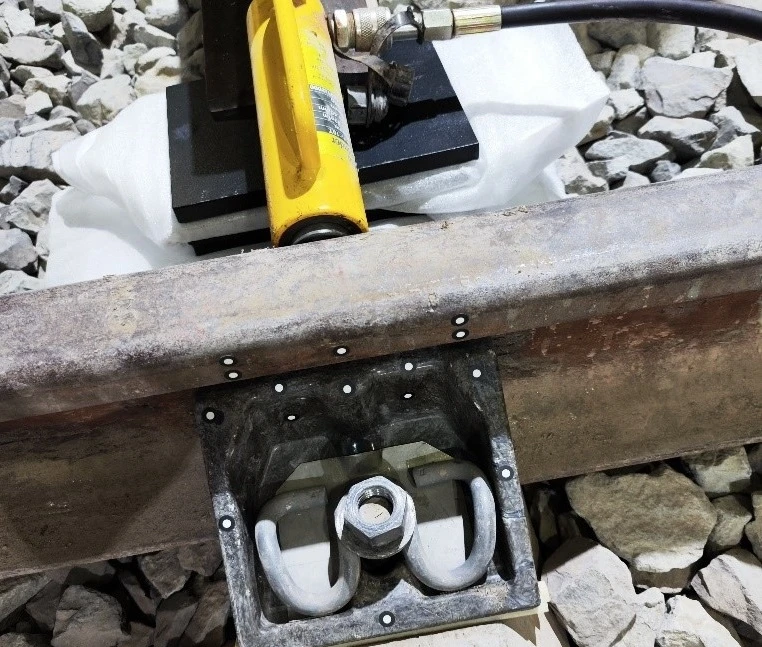
On-site view of the rail simulated loading test
The XTOP3D XTDIC-STROBE 3D dynamic measurement system utilizes high-speed industrial cameras (up to 4500 fps) to achieve a tracking accuracy of 0.005 px. It enables the simultaneous tracking of a vast number of marker points to analyze 3D coordinates, displacement, and deformation. Characterized by high precision, high efficiency, and excellent repeatability, the system effectively meets the demands of scientific research and engineering testing.
Key Project Pain Points
Railway tracks in curved sections are prone to geometric irregularities exceeding permissible limits; the dynamic centrifugal loads experienced during train passage cause continuous longitudinal rail slippage (rail creep) relative to the fastening system. Traditional manual inspections fail to capture dynamic deformations, while conventional sensors (such as strain gauges and displacement transducers) often miss critical hazard points and cannot correlate rail displacement with fastener deformation.
▶ Quantify the displacement suppression capabilities of rails and their fastening systems (various types of rail clips, Vossloh systems) under centrifugal force;
▶ Pinpoint structural weak points in the fixture.
▶ Establish early warning thresholds for millimeter-level displacement.
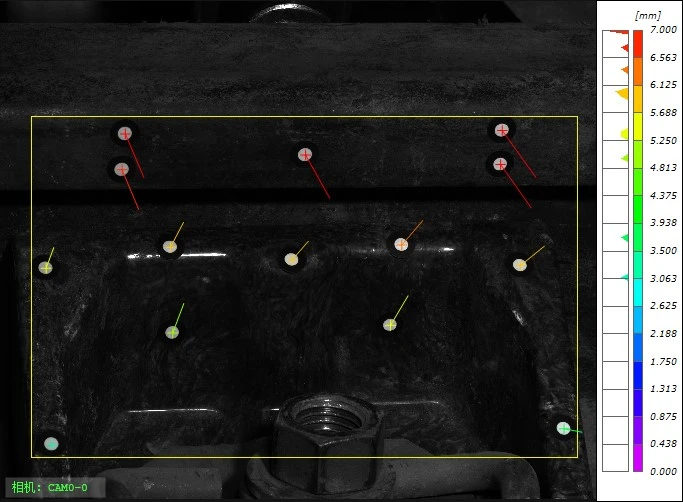
Area of the rail and its fastening components subject to inspection
Application Value of DIC Technology
1. Structural Performance Assessment: DIC technology provides real-time displacement and deformation data for marked points, directly quantifying the actual deformation and displacement of rails, fastening systems, and fixtures under dynamic loads during curve negotiation, thereby enabling the assessment of their safety, stability, and durability.
2. Design Optimization: It identifies design weaknesses (such as stress concentration points) and verifies the effectiveness of new fastening systems, sleepers, and ballast structures in controlling deformation.
3. Mechanism Research:It facilitates a deep understanding of the mechanisms by which wheel-rail interaction forces—occurring as trains traverse curves—are transmitted and cause deformation in various components of the track structure.
4. Damage and Failure Monitoring: It detects minute yet critical deformations (such as initial fastener slippage or micro-plastic deformation of the rail) that may serve as early indicators of fatigue crack initiation or progressive failure.
Displacement Monitoring Test Under Simulated Dynamic Loading
Test Objectives
Using a loading apparatus to simulate the centrifugal force experienced by a train negotiating a curve, this test analyzes the impact of various rail fastening systems on rail stability. It verifies whether displacement values meet design specifications, thereby helping to enhance train stability during cornering and improve railway operational safety.
Application of DIC Technology
Marker points are affixed to the surfaces of the rail and its fastening system. The XTDIC-STROBE 3D dynamic measurement system is then used to capture images of the areas of interest under various conditions.
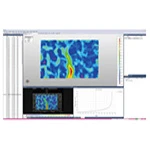
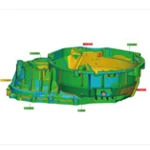
The DIC system analyzes these images by tracking the displacement of the marker points to calculate changes in the 3D coordinates of points on the rail and fastening system surfaces. This allows for the determination of deformation curves at various locations on the fastening system and lateral displacement curves for the rail.
Measurement Environment
Outdoor railway track site
Measurement Techniques
Due to strong ambient light, shading measures were implemented, and the camera's exposure time was reduced to enable image acquisition at the maximum frame rate.
Clearly defined markers were used as measurement points to facilitate precise displacement tracking at specific locations (such as bolt centers, specific parts of the fastening system, and key points on the rail web).
Experimental Procedure
Test Load: A hydraulic loading system simulated centrifugal force to apply incremental dynamic loads, while the deformation and displacement of the rail and its fastening system were monitored.
Analysis of Key Point Displacement
Displacement analysis of key points on the fastening system (fastener assembly)
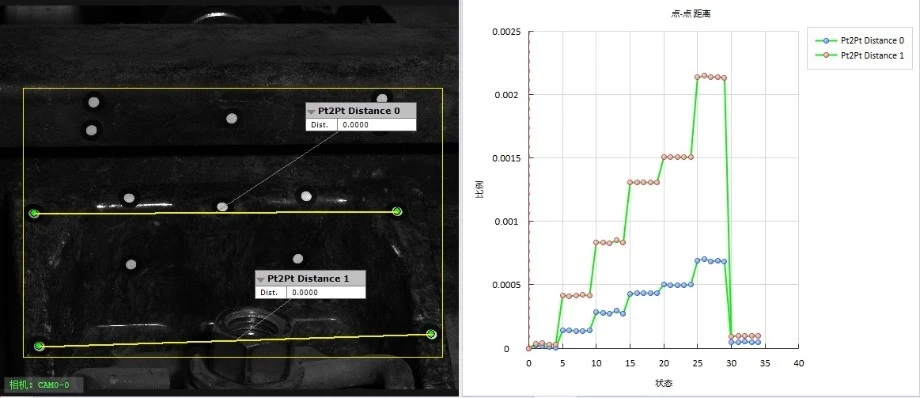
固定装置1(扣件系统)横向变形曲线
Monitoring Point Positioning: Placement of monitoring points in critical areas using single-set fasteners.
The characteristics of the relative displacement curve between Point 0 (bolt head) and Point 1 (middle of the rail clip) are shown in the figure below:
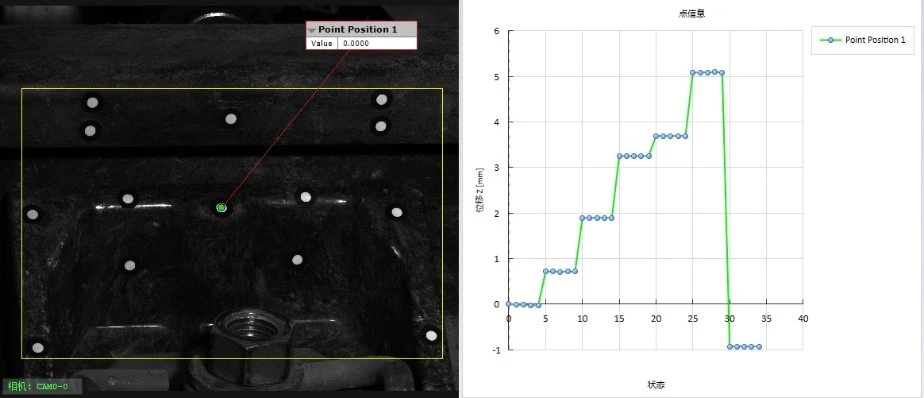
Lateral deformation curves of Fixture 1 at different positions
Lateral deformation curve of Fastening System 2
Monitoring point positioning: Sensors installed in key areas of a single fastening assembly
The displacement curve characteristics for the central section of the elastic clip are shown in the figure below:
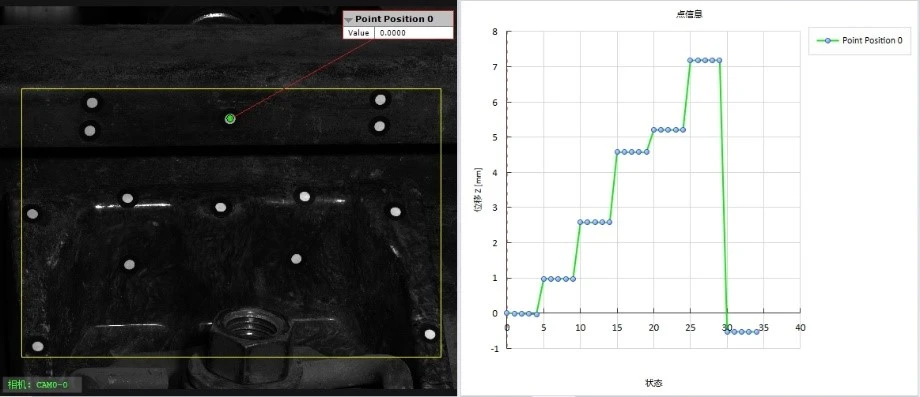
Lateral deformation curves of fixture 2 at different positions
Curves of key points in the rail lateral displacement field
Lateral rail displacement: Quantifies the extent of outward rail deflection (a critical safety indicator);
Quantitative analysis based on DIC technology enhances rail design optimization and operational/maintenance efficiency, while reducing preventive maintenance costs.
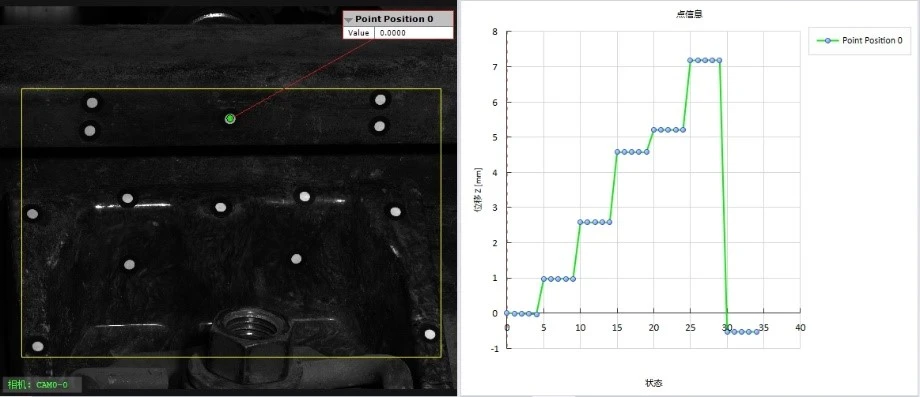
Rail side displacement and key point displacement curve
Utilizing the XTOP3D XTDIC-STROBE 3D dynamic measurement system—which combines a high-frame-rate industrial camera array (≥250 fps) with sub-pixel algorithms—the setup achieves micron-level dynamic displacement tracking. It captures the microscopic sliding trajectories between fastening bolts and rails at the instant of centrifugal force loading. By analyzing lateral rail displacement data and quantifying the restraint performance of mainstream fastening systems (such as elastic clips and Vossloh fasteners), the system enhances the safety margin for train stability during cornering, providing a data foundation for the integrated "diagnosis, treatment, and prevention" maintenance of railway track systems.